

When it comes to styling your windows, layering window treatments is one of the most impactful design decisions you can make. Much like fashion, the right layers create depth, dimension, and personality, while also improving comfort, privacy, and light control.
Whether you love bold patterns, timeless neutrals, or dramatic contrast, layering drapery with shades or sheers allows you to elevate your space while adding practical solutions. Let’s explore how to layer window treatments beautifully and intentionally.
Why Layer Window Treatments?
Layering isn’t just about aesthetics—it’s about function. When you combine shades and drapery, you gain a wide range of benefits that improve your lifestyle, comfort and the atmosphere of your home.
Layering Benefits:
- Greater light control
- Enhanced privacy
- Improved energy efficiency
- Visual depth and dimension
- A more custom, designer look
Instead of relying on one treatment to do everything, layering allows each element to play its own role.

The Foundation: Start with the Shade
Most layered designs begin with a functional shade. There are a number of popular base layers used to create the ideal light control, privacy and energy efficiency.
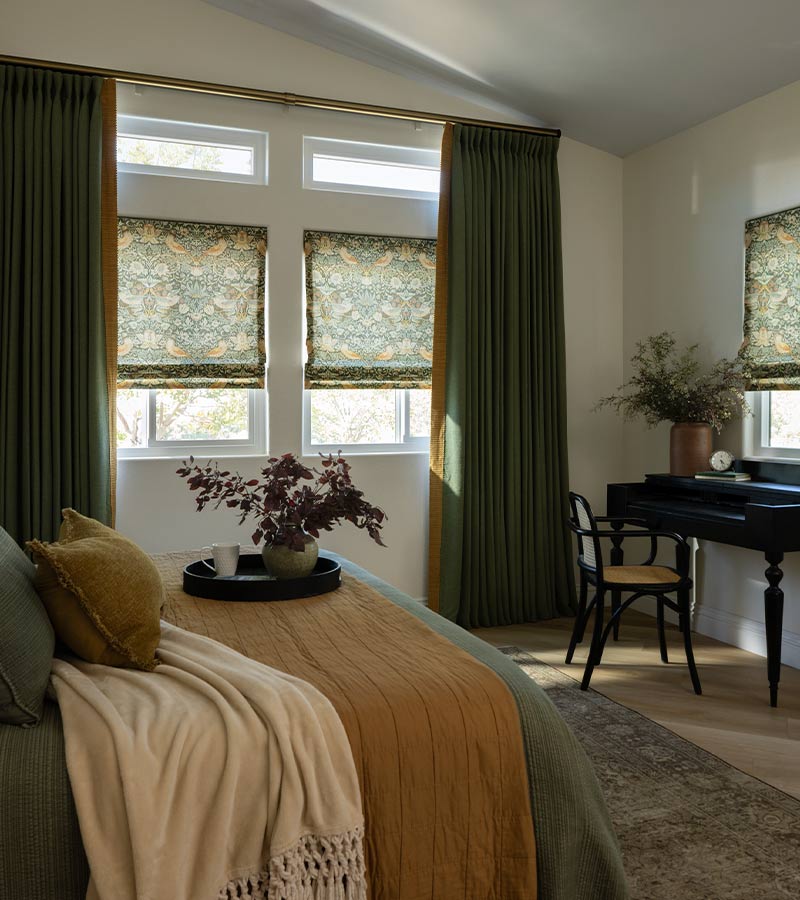
Roman Shades
Soft, structured, and available in endless fabrics. They add warmth while offering privacy and optional room-darkening.
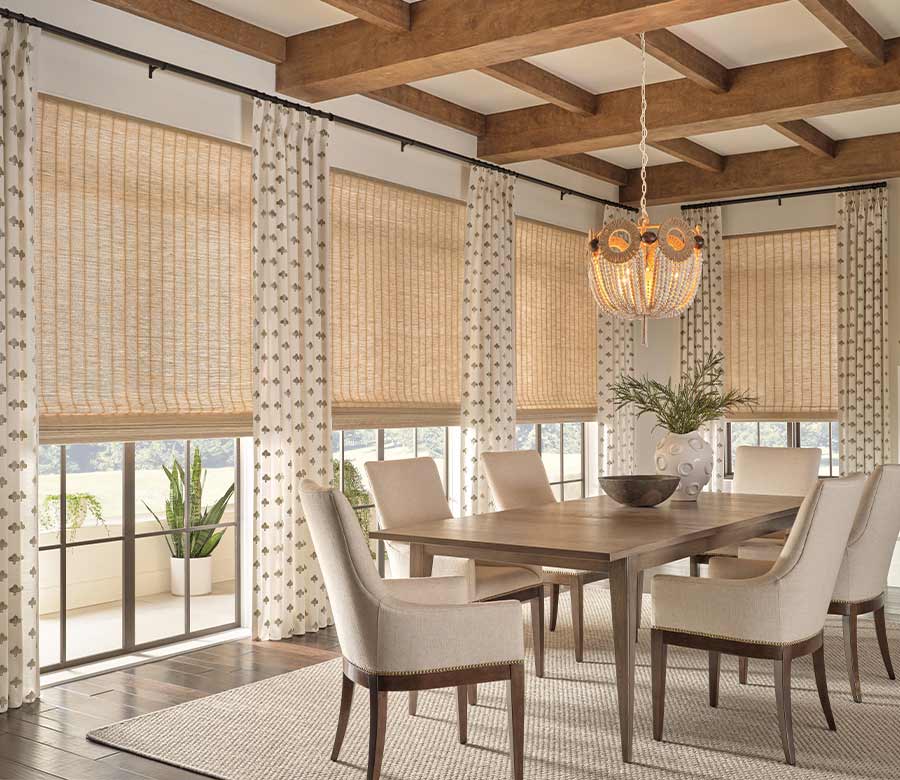
Woven Wood Shades
Organic texture that pairs beautifully with linen drapery for a modern, relaxed look.
Roller Shades
Clean and minimal, roller shades ideal for contemporary homes.

Sheer Shades
Perfect for soft, filtered light while maintaining your view.
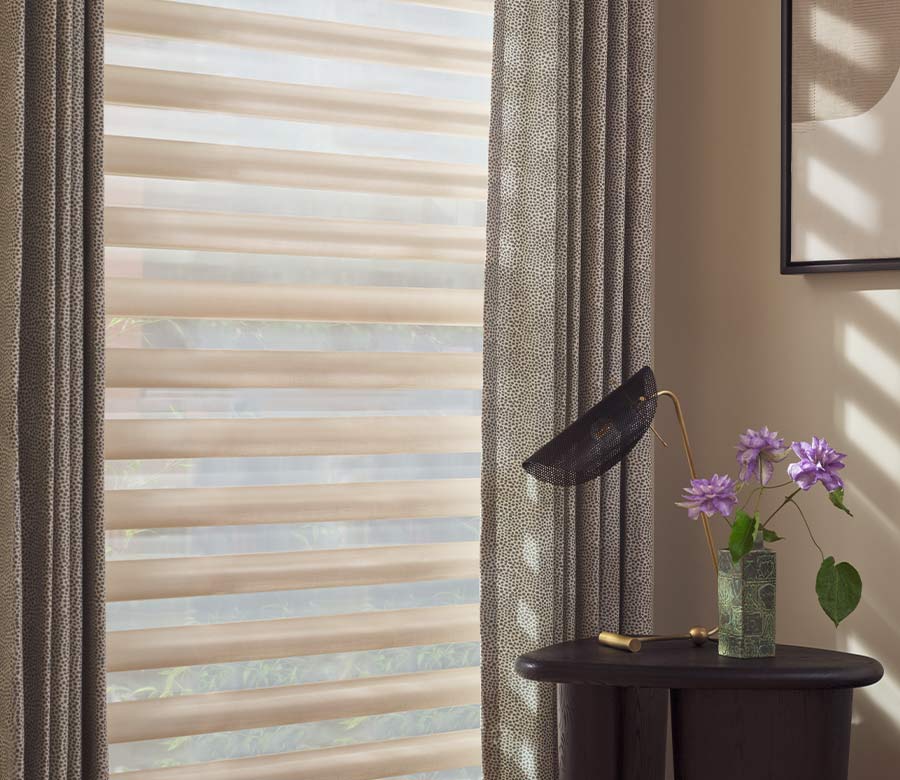
Your shade sets the tone for light control. Drapery enhances the design.
Elevate with Drapery Panels
Drapery adds height, drama, and softness.
Whether you choose full functioning panels or stationary side panels, drapery frames the window, adds contrast—or brings everything together, introduces pattern or text, and softens architectural lines.
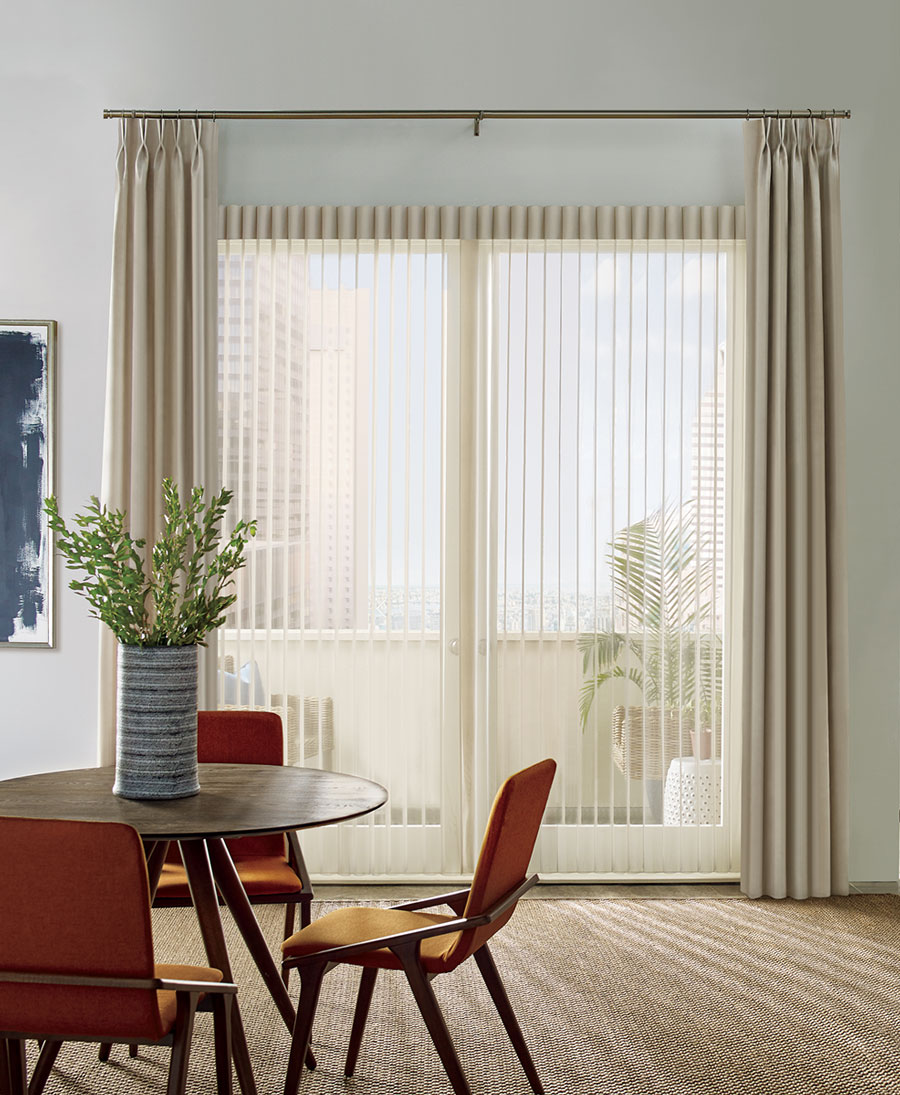
Choosing a Header Style
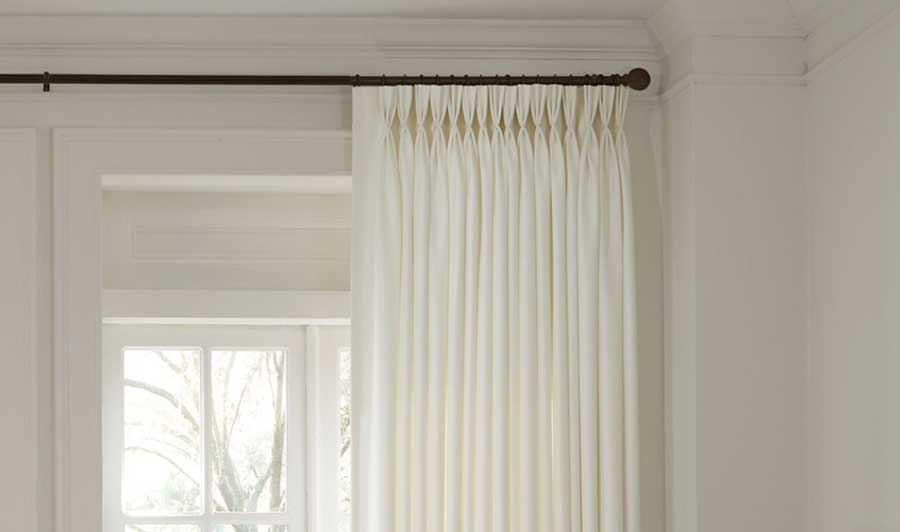
Pinch pleat styling remains one of the most popular header styles, followed by grommets and ripple fold. Ripple fold is ideal for a more tailored, track-mounted appearance.
Mixing Patterns & Textures
Patterns and textures are where layering becomes exciting.
Options include:
- Plaids
- Large-scale florals
- Stripes
- Geometrics
- Damasks
- Textured linens
The key? Balance.
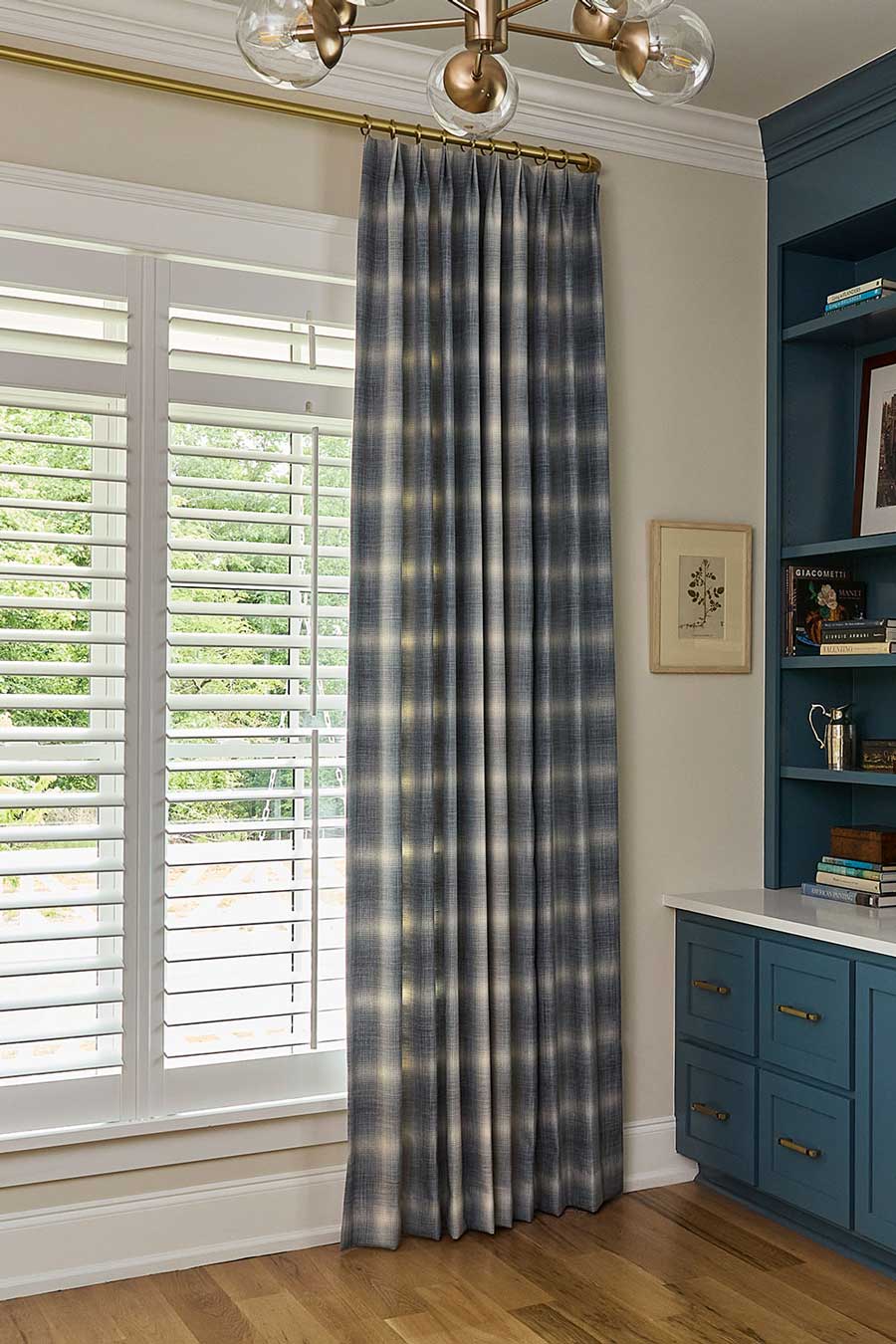
If your shade features texture (like woven woods), choose a simpler drapery fabric.
If your drapery is bold and patterned, keep the shade neutral.
A little contrast goes a long way.
Set the Scene with a Layered Look
Layering allows you to combine light and dark beautifully.
The Softer Side
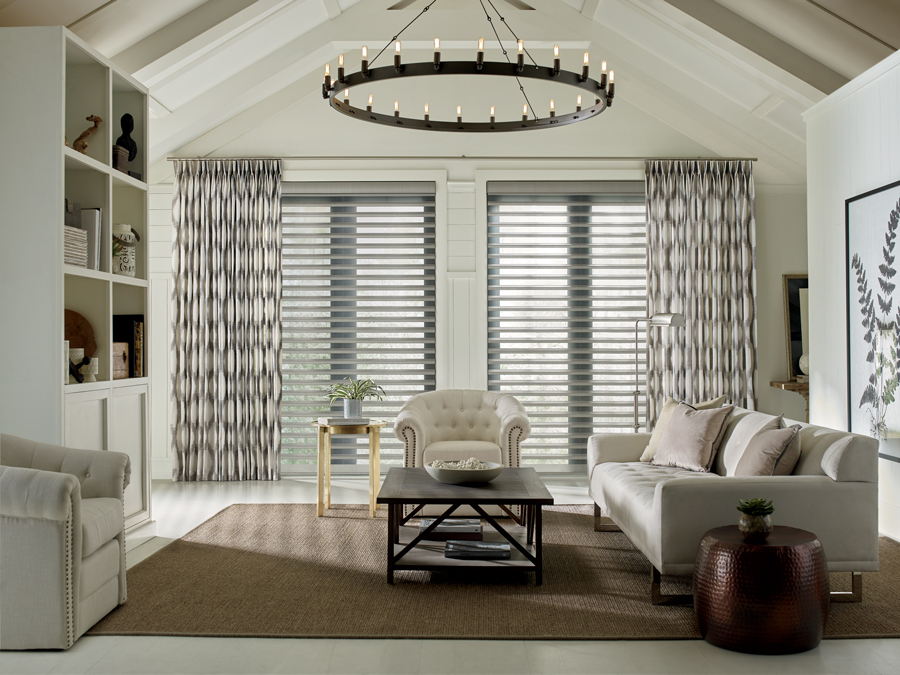
Neutral palettes — beige, gray, cream, white — create brightness and serenity. Add dimension with layered fabrics to prevent a flat look.

Moody Vibes
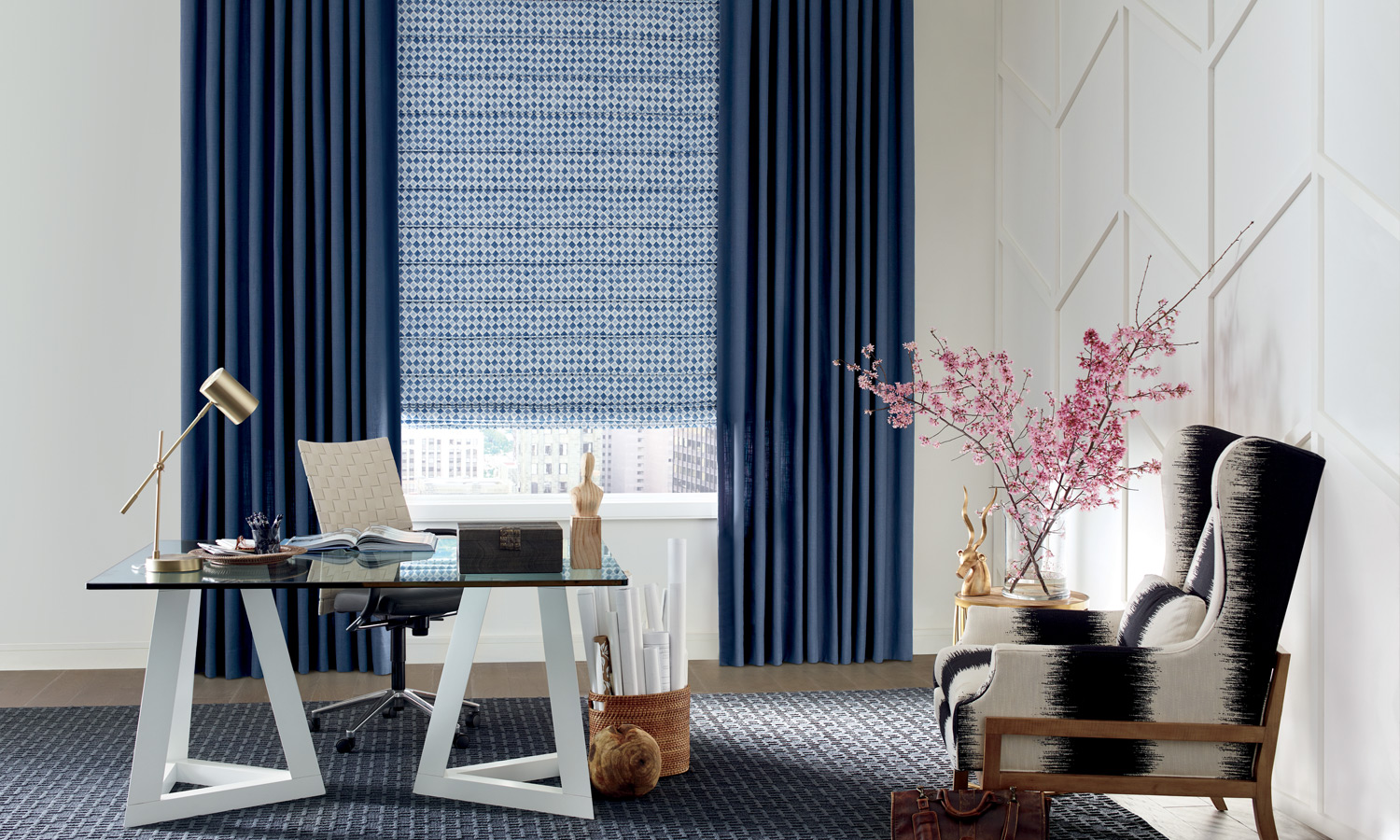
Darker palettes feel dramatic and sophisticated. Balance deep tones with lighter fabrics or filtered light to avoid overwhelming the space.
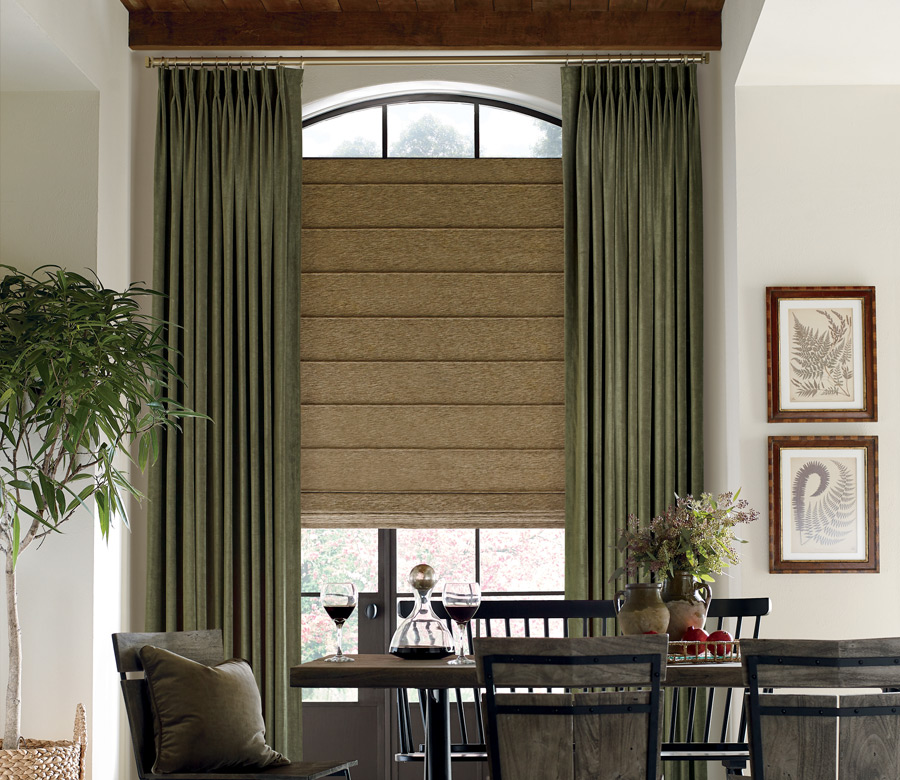
When done thoughtfully, moody and neutral tones can live together in harmony.
The Details Matter: Hardware & Placement
Hardware is the jewelry of the window.
Popular finishes include:
- Matte black
- Gold
- Oil-rubbed bronze
- Natural metals
Installing hardware closer to the ceiling creates the illusion of taller ceilings — a simple trick that dramatically changes the room’s proportions.
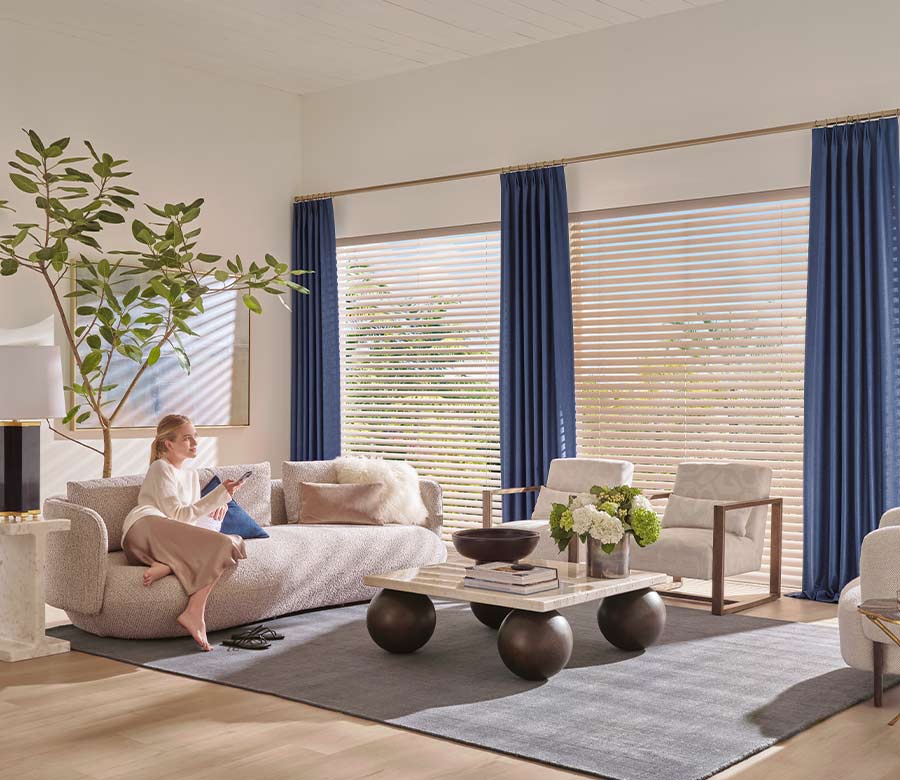
Visible rods make a design statement. Hidden tracks create a sleek, modern feel.
Pairing Shades with Drapery: Designer Combinations
Here are timeless layered combinations that work beautifully:
Woven Shades + Linen Drapery: Modern, organic, and airy.
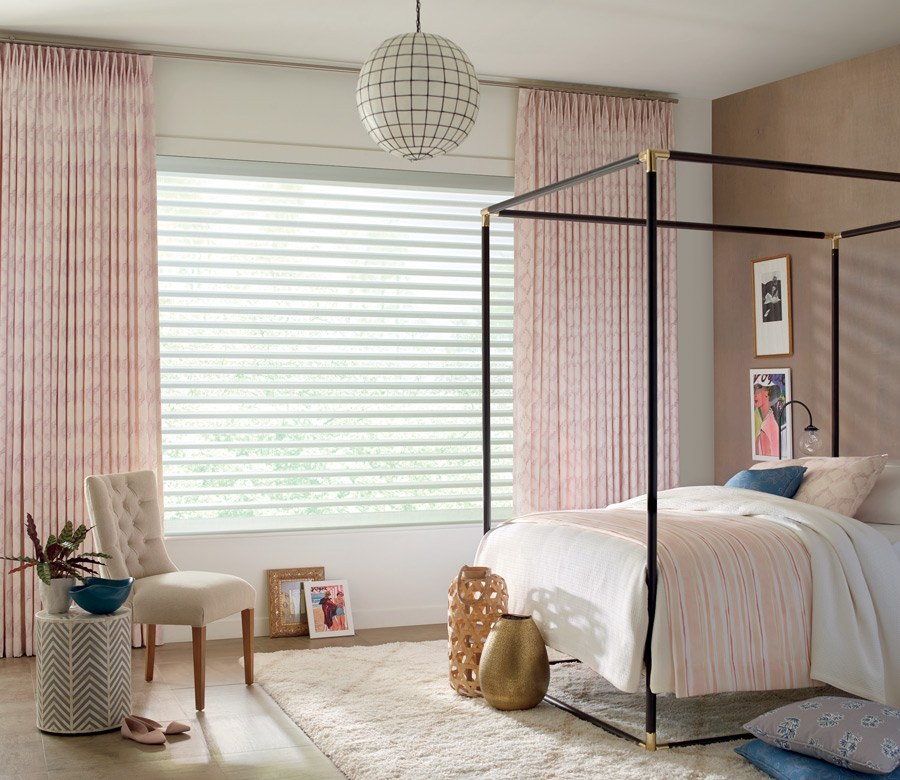
Sheer Shades + Solid Drapery: Soft light during the day, privacy at night.
Roller Shades + Patterned Drapery: Clean foundation with bold personality.
Room Darkening Shades + Drapery: Ideal for bedrooms or media spaces.
Layering gives you control. Adjust shades for filtered light, close drapery for complete privacy.
Layering in Unexpected Spaces
Layering isn’t limited to living rooms and bedrooms. While those rooms are the most common, layered window treatments can make a statement of style and function in any space.
Consider these spaces:
- Bathrooms
- Laundry rooms
- Closets
- Dining areas
- Home offices
Even sliding doors can benefit from layered treatments, combining vertical shades with drapery panels for softness and movement. Every room deserves personality.

Add Smart Features to Layered Designs
Layered window treatments can be motorized.
- Smart features include:
- Voice control
- Remote control
- Scheduled adjustments
- App-based scenes
Motorized drapery and shades make it easy to adjust multiple layers without effort, especially in tall or hard-to-reach spaces.
Style + Function = The Perfect Balance
Layered window treatments don’t just look incredible—they improve comfort.
They can:
- Reduce glare
- Improve insulation
- Enhance privacy
- Add room-darkening capabilities
- Create atmosphere for entertaining
This is where design and performance meet.
How to Know If Layering Is Right for Your Home
Layering is ideal if you:
- Want more dimension in your space
- Struggle with glare or privacy
- Love custom design details
- Want flexibility throughout the day
- Are refreshing your interior style
Whether you prefer bold fabrics or subtle textures, layering allows you to express your personal style while improving the way your home feels.
Ready to Create a Layered Look?
At Rocky Mountain Shutters, Shades & Closets, we help homeowners design layered window treatments that feel intentional, elevated, and functional. Visit one of our showrooms or schedule a FREE in-home consultation to explore fabric selections, hardware finishes, and custom combinations tailored to your Denver-area home. Let’s design something beautiful together.