

A well-organized home office makes it easier to focus, find what you need, and move between daily tasks. But when paperwork piles up, cords take over the desk, and multiple family members share the same workspace, even a dedicated office can become difficult to manage.
Learning how to organize a home office starts with understanding how the space is used. Whether you’re working remotely, managing household paperwork, helping with homework, or tackling creative projects, the right combination of storage, workspace organization, and daily habits can make a meaningful difference. From keeping desktops clear to making better use of shelving, drawers, and cabinetry, these home office organization ideas can help you create a space that supports productivity and works for your household.
Start with How You Use Your Home Office
Before rearranging furniture or purchasing organizers, take a closer look at how your home office functions. What works well? What causes frustration? Where does clutter tend to collect?
Questions to ask:
- Who uses the space, and what do they use it for?
- Is it primarily a workspace, or does it serve multiple purposes?
- Which supplies and materials are used daily, weekly, or occasionally?
- Where do paperwork, electronics, and other belongings tend to accumulate?
- Does more than one person need to use the office at the same time?
Consider the needs of everyone who uses the room. A dedicated work-from-home setup may require different storage than a shared family office used for homework, household paperwork, and creative projects. Once you understand how the space is used, you can make better decisions about layout, storage, and daily organization.

Important Elements of a Well-Organized Home Office
An organized home office doesn’t necessarily require more space. Often, the biggest improvements come from creating dedicated places for frequently used items, keeping work surfaces clear, and choosing storage that supports daily routines.
Keep Desks and Work Surfaces Clear
A cluttered desk makes it harder to begin a task, especially when paperwork, devices, and supplies compete for limited space. Start by removing items that don’t need to remain on the work surface. Keep frequently used essentials within reach and move occasional-use supplies into nearby drawers, cabinets, or shelving. A few simple habits can make a difference:
- Keep only current projects and everyday essentials on the desk.
- Use drawer organizers for pens, chargers, and smaller supplies.
- Designate a separate location for incoming paperwork.
- Clear the work surface at the end of each day.
For offices that serve multiple purposes, a well-planned desk layout can also provide enough room to transition between work, homework, and other activities.

Create a System for Paperwork and Supplies
Mail, bills, school forms, and work documents can quickly overwhelm a home office without a consistent filing system. Closed storage is particularly helpful for reducing visual clutter. Drawers and cabinets can keep office supplies, electronics, and household materials organized without leaving everything on display.
When planning storage, think about how frequently each item is needed. Everyday essentials should be easy to reach, while archived files and occasional-use supplies can be stored farther away. Start by separating paperwork into categories such as items requiring action, documents to file, and materials that can be discarded or recycled. Use labeled folders, file drawers, or dedicated cabinets to keep important information accessible.
Make Better Use of Vertical Storage
When desktop and floor space are limited, look to the walls. Shelving, bookcases, and cabinetry can provide additional storage without taking up valuable workspace. Open shelves work well for frequently used books, reference materials, and decorative items, while enclosed cabinets can conceal supplies and paperwork.
Adjustable shelving can also help accommodate changing storage needs as collections, equipment, and household routines evolve. For offices that need more than freestanding organizers, custom storage solutions can incorporate built-in shelving, drawers, and cabinetry designed around the available space.

Organize Technology and Cords
Computers, printers, charging devices, and other electronics are essential to many home offices, but they can also contribute to clutter. Begin by identifying which devices need to remain connected and which can be stored when not in use. Group related cords, label chargers, and establish a dedicated charging location.
Consider these practical improvements:
- Use cable clips or cord organizers to keep wires together.
- Position frequently used devices near accessible power outlets.
- Create a dedicated location for charging phones and tablets.
- Store printers and occasional-use equipment in accessible cabinets or shelving.
- Keep ventilation and electrical safety in mind when placing equipment inside cabinetry.
For more permanent workspaces, desks and cabinetry can be designed with cable openings and dedicated technology storage.

Create Zones for Shared Workspaces
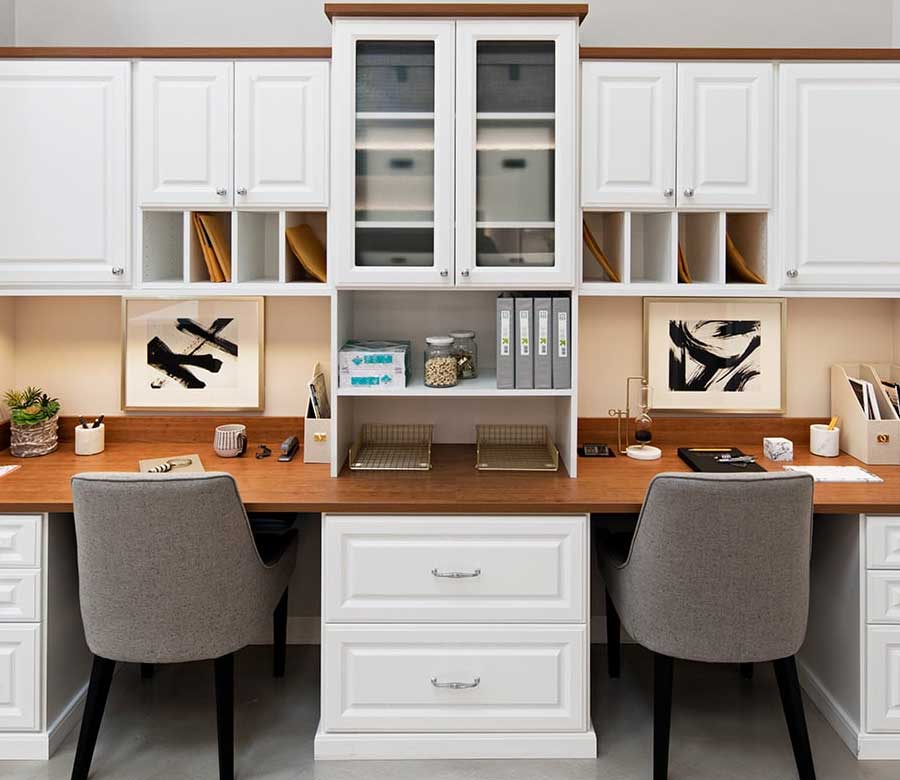
Many home offices serve several purposes throughout the day. One person may work remotely, another may need a homework station, and the same room may also be used for household management or creative projects. Instead of allowing every activity to compete for the same surface, establish separate zones where possible.
A shared office might include a primary desk, a secondary work surface, and dedicated storage for each person’s supplies. Even in a smaller room, separate drawers, shelves, or containers can help maintain boundaries between activities. The goal is to make it easy to transition from one task to another without constantly reorganizing the entire room.
Improve Light Control and Reduce Glare
Good lighting is another important part of a functional home office. Natural light can make a workspace feel more inviting, but direct sunlight and glare can interfere with computer screens, video calls, and daily tasks.
Position desks with window exposure in mind and consider adjustable window coverings that allow you to manage brightness throughout the day. Depending on the room, Hunter Douglas window treatments can provide light filtering, glare reduction, privacy, and additional comfort while complementing the overall office design.

Build Home Office Organization That Lasts
The most effective home office organization systems are the ones you can maintain. Before investing in additional furniture or storage accessories, consider whether your current layout provides enough space for the activities, equipment, and belongings you need to manage.
Small improvements, such as better filing systems, drawer organizers, and consistent daily habits, can make a noticeable difference. When the room needs a more complete transformation, built-in storage can help create a workspace designed around your specific needs. At Rocky Mountain Shutters, Shades & Closets, we design custom home office storage solutions with integrated desks, cabinetry, drawers, and shelving for Denver-area homes.
Whether you’re creating a dedicated workspace or organizing a room shared by the entire family, our designers can help you explore options that balance storage, functionality, and style. Schedule a free design consultation to get started.